
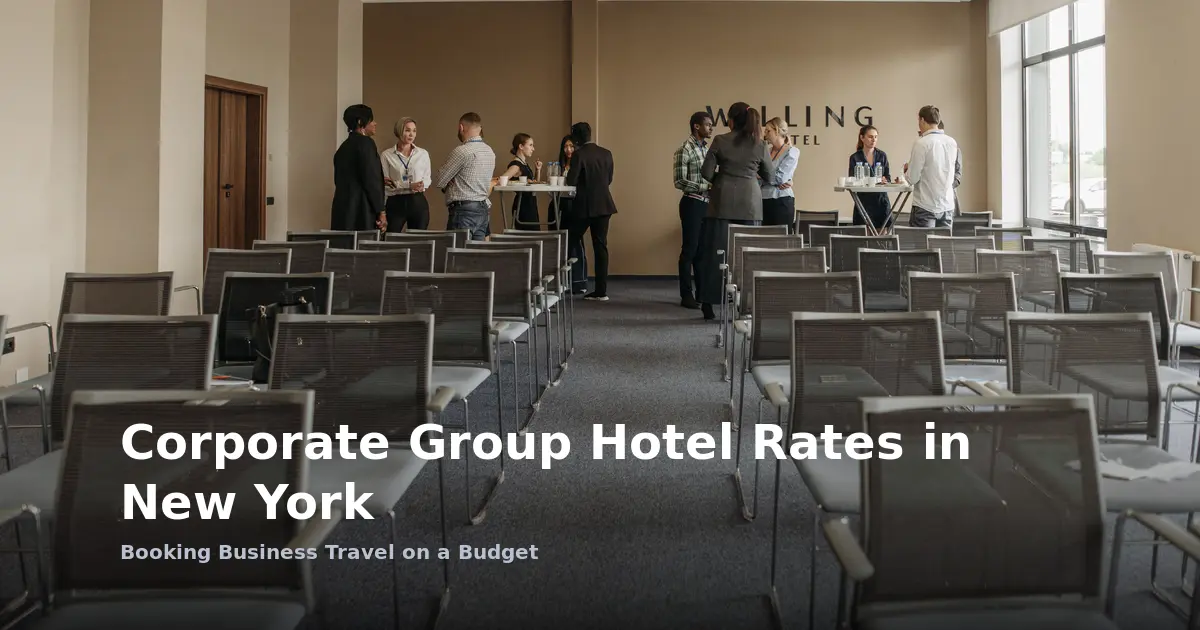
The Challenge of Corporate Group Travel in New York
Managing corporate travel for a team, department, or entire organization in New York City presents a unique set of challenges. Between the high demand for Manhattan real estate and the fluctuating seasonal pricing of the Big Apple, securing a group block that balances luxury with a strict corporate budget requires a strategic approach. Whether you are organizing a quarterly leadership summit, a multi-day training seminar, or a company-wide conference, the goal is always the same: maximizing value without compromising the professional standard of the stay.
Navigating the New York Corporate Hotel Market
New York City is one of the most competitive hotel markets in the world. For corporate travel planners, the primary difficulty lies in the disparity between standard retail rates and negotiated group rates. When booking a block of rooms, businesses have the leverage to request lower per-night rates in exchange for a guaranteed number of occupied rooms.
Depending on the objective of the trip, the choice of property can vary wildly. For high-stakes executive meetings where image and prestige are paramount, luxury options like the Baccarat Hotel New York Baccarat Hotel New York or the Trump International Hotel and Tower Trump International Hotel and Tower provide the sophisticated environment necessary for corporate diplomacy. Conversely, for larger teams or mid-level management retreats where utility and location are the priorities, properties such as Holiday Inn Holiday Inn offer a more budget-friendly entry point while maintaining essential business amenities.
Strategies for Reducing Group Costs
To book business travel on a budget, planners must move beyond the "book now" buttons found on consumer travel sites. Corporate group rates are rarely published; they are negotiated.
Leverage Competitive Bidding
The most effective way to ensure a business is not overpaying is to create a competitive environment. By inviting multiple hotels to bid for the group's business, planners can see exactly what the market is willing to offer for their specific dates and room requirements. When hotels compete for a single corporate contract, they are more likely to offer concessions, such as waived meeting room fees or complimentary breakfast for the group.
Optimize Room Type Distribution
Budget leaks often occur when planners book a uniform block of high-tier rooms. To save costs, specify a mix of room types. For instance, senior executives may require suites or king rooms, while junior staff or support teams can be accommodated in double rooms. Being specific about the number and type of rooms—such as king, double, or suite—allows hotels to price the block more accurately and potentially lower the overall average nightly rate.
Consider Location and Flexibility
While Midtown is the traditional hub for business, exploring other corporate-friendly areas can lead to significant savings. Properties like Hyatt Union Square New York Hyatt Union Square New York or Eventi Eventi provide excellent access to the city's business districts while offering different pricing structures than the central hotel clusters.
Streamlining the RFP Process
The traditional method of calling dozens of hotels and emailing spreadsheets is inefficient and often leads to missed opportunities. A more modern approach involves using a centralized Request for Proposal (RFP) system to aggregate bids.
At grouprooms.org, the process is designed to remove the guesswork from corporate booking. The platform serves 254 hotels in New York, providing a massive pool of inventory to choose from. Instead of spending hours on the phone, planners can submit a single RFP specifying their city, dates, room requirements, and any special corporate needs.
For a fee of $3 per request, planners can trigger a competitive bidding process. Hotels respond directly with their best group rates, available amenities, and specific contract terms. This allows the travel coordinator to compare rates and terms side-by-side, ensuring the chosen property fits the budget without requiring a compromise in quality. For those unfamiliar with the process, the How It Works page provides a detailed breakdown of the workflow.
Finalizing the Corporate Contract
Once the bids are received, the focus shifts to the contract terms. Corporate planners should look beyond the nightly rate and examine the "attrition clause"—the percentage of rooms the company must pay for even if they remain unfilled. A flexible contract is often more valuable than a slightly lower rate.
Whether you are looking for the historic charm of The Hotel Edison NYC The Hotel Edison NYC or a modern corporate hub, the key is transparency and competition. By using a structured bidding process, businesses can secure professional accommodations while keeping travel expenditures under control.
To explore available properties and start the bidding process, you can visit the New York Hotel Directory or review the Pricing page for more information on submission costs.
Submit your group room request on grouprooms.org and compare rates from multiple hotels to ensure your next New York business trip is both productive and cost-effective.